In the world of silver collecting, Danish Silver offers a refreshing simplicity. It lacks the heavy ornamentation of Victorian England and the extreme opulence of French Rococo.
According to authoritative charts (SilverCollection.it - Denmark), while the Danish hallmark system may seem complex, its core logic is crystal clear. Master the Three Towers (Three Towers), the Assay Master, and the Year Codes, and you become an expert.
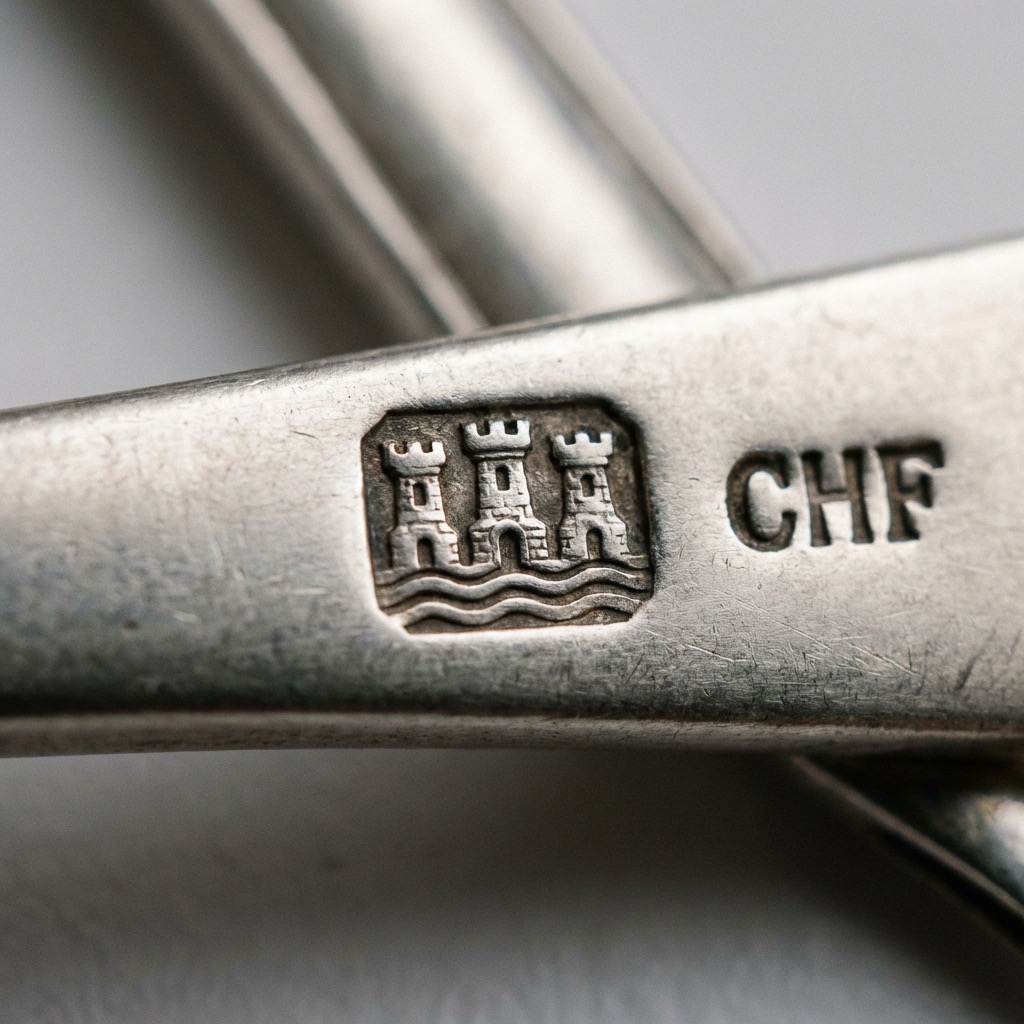
🏰 The Core: Three Towers (Tretårnet)
This is the Copenhagen town mark and the national guarantee of purity. Used from 1608 until it was discontinued in 1977 (replaced by the universal 925 S).

- Symbol: Three castle towers with waves beneath (symbolizing Copenhagen’s waters).
- Meaning:
- Pre-1911: Guarantees 826/1000 purity.
- 1911 - 1977: Guarantees 830/1000 purity.
- Year Code: Below the towers, there are usually two small digits representing the last two digits of the year.
19= 191905= 190521= 1921
💂♀️ The Assay Master
Next to the Three Towers, you will often find an oval containing initials. This is the mark of the state Assay Master (Stadsguardein-Wardens), endorsing the purity. This is a precise tool for dating:

- SG (Simon Groth): 1863 - 1904
- CHF (Christian F. Heise): 1904 - 1932 (The most common companion to early Georg Jensen pieces)
- JS (Johannes Siggaard): 1932 - 1960 (Witness to the Golden Age of Danish Design)
🍽️ Brands & Makers
Danish silver is far more than just Georg Jensen. Many manufacturers collaborated with distinguished designers, so you may often see a maker’s mark alongside a designer’s signature.
Here are other key brands you might encounter besides Jensen:
- D.A. (Dansk Arbejde): Danish Handicraft Guild mark (est. 1908), signifying high-quality Danish make.
- COHR: The famous Cohr Silver, known for diverse designs and the “ATLA” (silverplate) line.
- W&S (W. & S. Sørensen): Renowned silversmiths from Horsens.
- Hans Hansen: Later acquired by Georg Jensen, known for ultra-modernist styles.
- M (Michelsen): Royal Court Silversmith A. Michelsen, famous for enamel Christmas Spoons.
🌿 Dating Georg Jensen
- 1904-1908: “GEORG JENSEN” (No oval).
- 1915-1930: GI Monogram. The classic early mark, usually 830 S.
- 1933-1944: GJ Square or round marks.
- 1945-Present: “GEORG JENSEN” in Dotted Oval.
⚠️ The Trap: Silverplate (Plet)
Danish silverplate is also exquisite, but values differ vastly. If you see marks similar to the following, it is silverplate:

- Two Towers: Only two towers, mainly used on silverplate (1890s-1930s).
- P (Plet): Danish for “Plate” / Plated.
- ATLA: Cohr’s dedicated silverplate brand.
- EPNS: Electro Plated Nickel Silver.
📝 Summary Table
| Mark Symbol | Meaning | Period |
|---|---|---|
| Three Towers | 826/830 Silver (National Std) | 1608 - 1977 |
| Two Towers | Silverplate | 1890 - 1930s |
| P / Plet | Silverplate | All periods |
| Sterling / 925 S | 925 Silver (Modern/Export) | 1930s - Present |
| CHF (Sign) | Assay Master Heise | 1904 - 1932 |
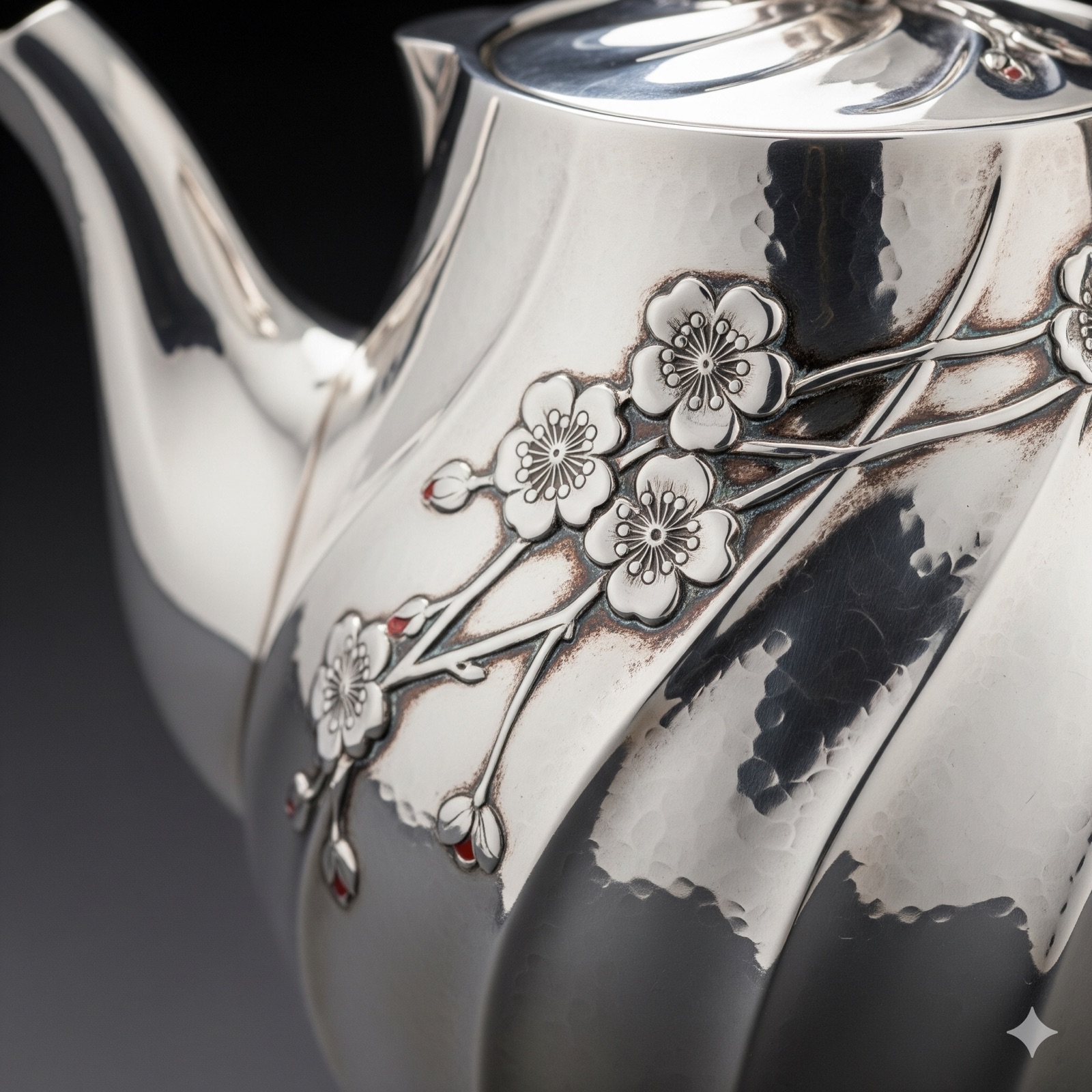
The beauty of Danish silver lies in treating silver as a “living” material. It doesn’t seek a blinding mirror finish but embraces the hammered finish and oxidative shadows, allowing the silver to glow softly like moonlight.