In Italy, there is a long-standing saying: “Buccellati is the prince of jewelers.”
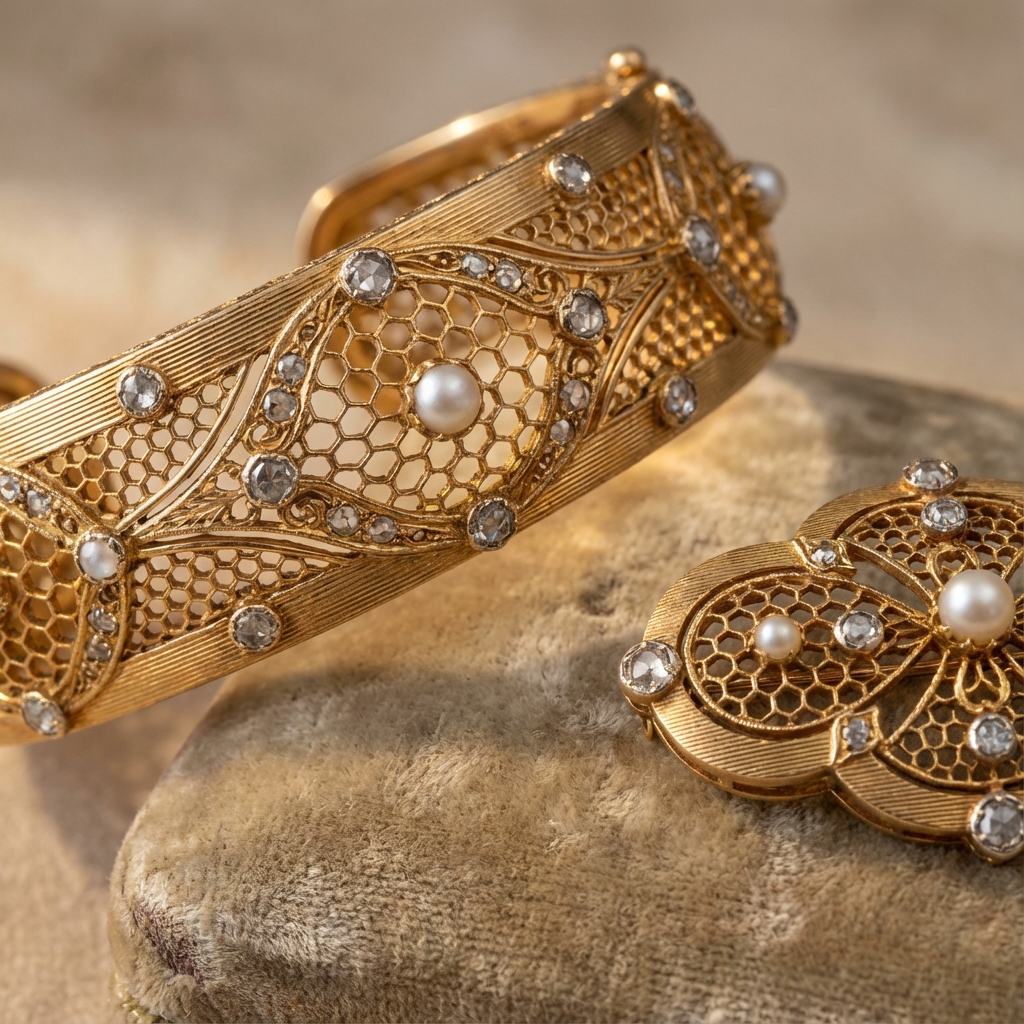
If you have been to Milan, you might have seen them in the windows of Via Montenapoleone: gold jewelry that doesn’t look like metal, but rather like it was woven from the finest lace. They lack that aggressive sparkle, but possess a warm, matte texture like silk.
This is Buccellati, a century-old maison that insists on using ancient Renaissance techniques to resist the flood of modern industrialization.
More Than “G-Dragon’s Daisy”
For many young collectors, the introduction to Buccellati often comes through G-Dragon.
The Blossom Collection (often called “Daisy” in Asia) he wears, with its unique two-tone design of silver set with gold and relatively accessible price, has become the brand’s entry-level hit. The oxidized texture of silver paired with the golden center is indeed very stylish and recognizable.
However, Blossom is just a stepping stone into Buccellati’s vast palace of art.
If your gaze stops at silver, you might miss the true soul of this brand. Buccellati’s real mastery lies in its treatment of gold—a magic that turns hard metal into something as soft as silk or lace.
Weaving Gold: The Secret of Rigato
Buccellati’s most iconic technique is called Rigato.
When you pick up a Buccellati ring, you will be amazed by its surface texture. It is not a smooth mirror finish, but covered with countless lines as fine as hair.
This is not machine-pressed, but hand-engraved by artisans with a burin on the gold surface.
- The artisan cuts parallel lines into the metal, with every stroke’s force and spacing requiring perfect consistency.
- This technique gives the gold surface a diffuse reflection effect similar to silk, eliminating the “harshness” of the metal and making it soft and noble.
Besides Rigato, Buccellati has other exclusive skills:
- Telato: Imitating the cross-texture of linen.
- Segrinato: Engraving in all directions to create a velvet-like texture.
- Ornato: Inspired by nature, engraving complex patterns like flowers and animals.
Honeycomb Lace: Tulle Technique
If Rigato is a treatment of the surface, then Tulle is a challenge to the structure.
Buccellati’s artisans pierce countless hexagonal holes in gold sheets to imitate the “honeycomb” structure of lace fabric. This requires extreme patience and precision; one slip, and the delicate gold mesh will break.
Finally, they set a tiny diamond in the center of each hexagon. As a result, the whole piece of jewelry looks like a light lace veil, with diamonds dotted on it like dew, ethereal and dreamy.
Timeless Beauty
When Mario Buccellati founded the brand in 1919, he established a core philosophy: Jewelry should be art, not a tool to show off wealth.
In an era when Art Deco was prevalent and everyone pursued geometric lines and huge gems, Buccellati stubbornly drew inspiration from Renaissance goldsmithing. They did not follow trends, nor were they abandoned by them.
This philosophy was perfectly inherited by his son, Federico Buccellati. Federico was particularly good at drawing inspiration from nature, transforming seemingly ordinary plants into immortal gold sculptures.
For example, a Federico Buccellati signed Artichoke brooch we recently had the privilege to see is a perfect example of this naturalistic aesthetic.
- Symbolism: The artichoke symbolizes “natural protection” and a “soft core” in Western culture.
- Craftsmanship: The artisan used a burin to precisely restore the texture of each leaf, alternating between polished and Satin Finish on the leaves to create a vivid sense of layering and flow.
This brooch is not just a piece of jewelry, but a miniature Renaissance sculpture. It perfectly interprets how the Buccellati family combines traditional goldsmithing with modern aesthetics, giving a plant eternal life in gold.
Collector’s Note: Early nature-themed works signed by Federico like this are very rare in the market. If you are also interested in this kind of “sculpture to wear,” you might want to check our eBay Selection to find your own piece of Italian elegance.
Conclusion
In this fast-paced era, Buccellati seems a bit out of place.
A complex piece of Buccellati jewelry may take an artisan months or even years to complete. But it is this luxurious waste of time that achieves its uncopyable soul.
If you have the chance to go to Italy, be sure to visit a Buccellati store. Even if you don’t buy, just gazing at that gold “woven” into lace is enough to give you a brand new understanding of the word “craftsmanship.”