Jan van Eyck’s The Arnolfini Portrait is one of the most famous puzzles in Western art history.
Is this couple getting married? Who are the two figures reflected in the convex mirror? Does the bride’s rounded belly mean she is pregnant?
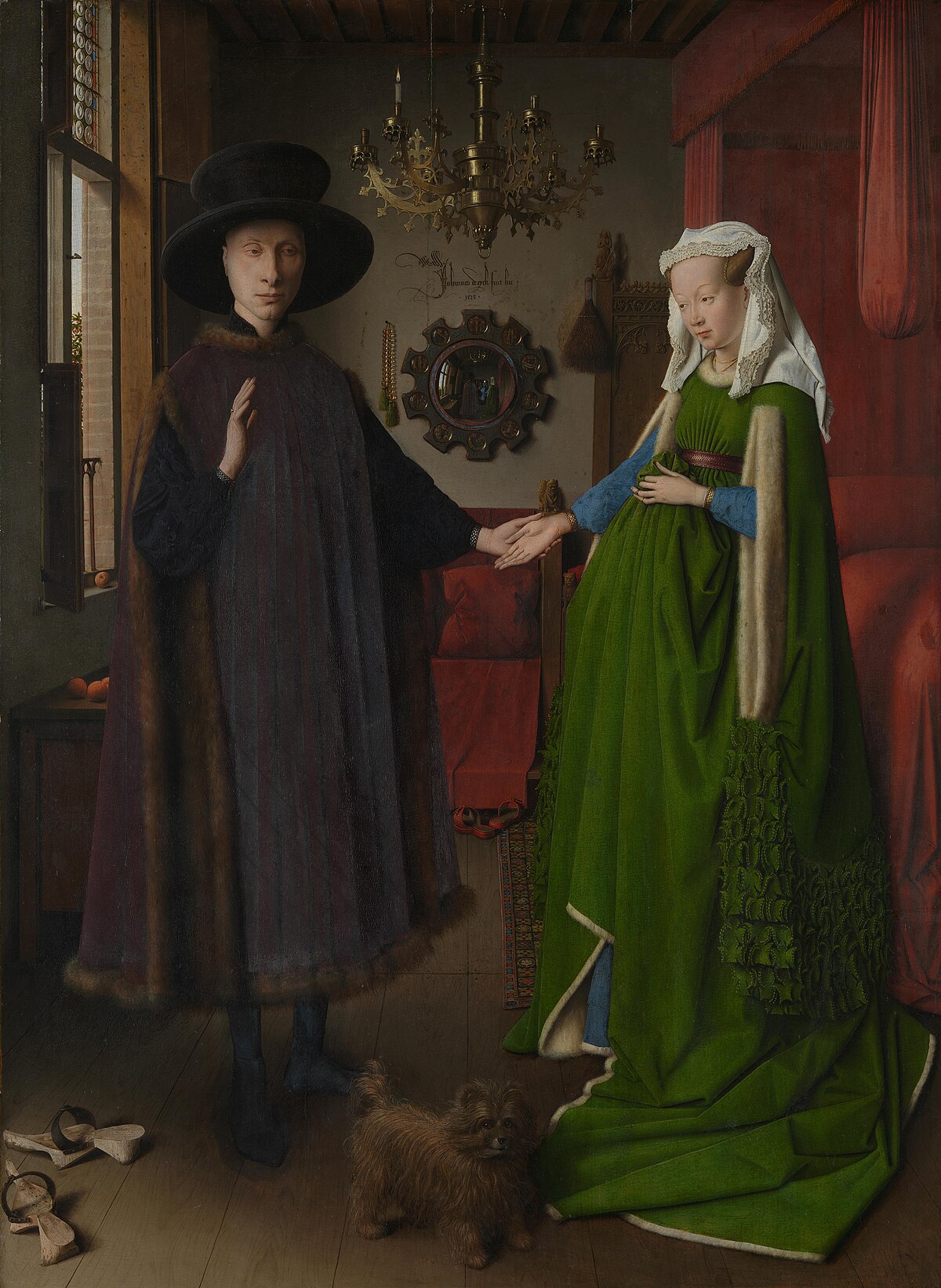
Amidst this painting full of symbols, there is a detail often overlooked by modern viewers but strikingly obvious to 15th-century eyes—the string of amber beads hanging on the back wall, to the left of the mirror.
The “Gold of the North”
In 1434 Bruges, amber was known as the “Gold of the North.”
Although amber comes from the Baltic coast, not too far from the Netherlands, high-quality transparent amber was still an expensive luxury. This rosary, composed of dozens of polished amber beads ending with a silk tassel, hangs quietly on the wall, proclaiming the Arnolfini couple’s substantial wealth.
Van Eyck used his signature delicate brushwork to depict the texture of light passing through the semi-translucent amber. They cast warm, orange-yellow shadows in the dim room, as if capturing solidified sunlight.
Faith and Purity: A Vessel of Light
Why hang a string of amber beads on the bedroom wall?
At the time, rosaries (Paternosters) were a common gift from a groom to his bride. Amber was not only beautiful but also believed to have magical healing powers in medieval medicine, warding off plague and evil.
But more importantly, it is about its reaction to light.
Van Eyck’s obsession with light is fully displayed here. When light passes through amber, it is not blocked; it is embraced and illuminated. This physical property was given a sublime meaning in theology: it symbolizes Purity and Divinity—just as light passes through glass without breaking it, often used as a metaphor for the Virgin Birth.
Perfect Details
The beads hang next to the convex mirror, which is surrounded by ten scenes of the Passion of Christ.
The translucency of the amber, the reflection of the mirror, and the highlights on the brass chandelier together form a sacred space of light and shadow. Through his extreme depiction of these materials, Van Eyck transformed secular matter into spiritual symbols.
Conclusion
The Arnolfini Portrait is a visual contract recording the wealth and faith of a 15th-century merchant.
That string of amber quietly hanging on the wall witnessed the couple’s vows. It is not a show-off, but a silent prayer, asking for God’s light to shine through their marriage, just as it shines through the amber.